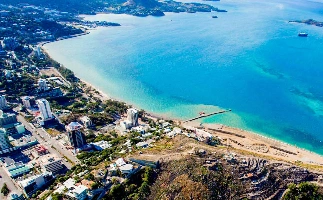
Shipping to Papua New Guinea by sea can be straightforward—or it can become a slow, expensive chain reaction. The difference is rarely the ocean leg itself. It’s usually the gateway choice (Port Moresby vs Lae), container fit, documentation quality, customs readiness, and how well you control time-based fees like demurrage and detention.
This page gives you a complete operational view of sea freight to PNG from Australia: how the journey works end-to-end, what drives cost, what causes delays, how to choose the right container and packing method for tropical conditions, and what to do to keep shipments moving on schedule and on budget.
What “Sea Freight to PNG” Actually Includes
People often treat sea freight as “port to port.” In real execution, your shipment has multiple stages, each with its own costs, compliance steps, and failure points:
1) Origin planning (Australia) → booking, equipment selection, pickup/cartage, export documentation, VGM plan.
2) Terminal receival → gate-in (FCL) or warehouse receival and consolidation (LCL).
3) Sea transit → ocean freight plus carrier surcharges and schedule management.
4) PNG arrival and terminal handling → discharge, destination fees, release processes.
5) Customs and clearance → broker lodgement, valuation/classification, permits, inspections, payments.
6) Delivery and container return → trucking, unloading, empty return (FCL), and closure of fees.
If your quote or plan only covers one piece of that chain, you’re likely to face “unexpected” costs later.
Choosing the Right PNG Gateway: Port Moresby vs Lae
The gateway decision should be based on where the cargo will be used and how complex the inland leg will be. Inland distribution can be the biggest driver of reliability and total cost, especially when site access is constrained, unloading equipment is limited, or clearance timing is uncertain.
If you need a focused comparison, use this guide: Port Moresby vs Lae: How to Choose the Right PNG Gateway for Your Cargo.
As a practical rule: Port Moresby tends to suit capital-corridor deliveries and time-sensitive replenishment. Lae often suits broader distribution and industrial supply chains—provided delivery planning is locked in early.
FCL vs LCL: Which Shipment Mode Fits PNG Best?
Most PNG shipments fall into two modes: FCL (Full Container Load) or LCL (Less than Container Load). The best option depends on volume, risk tolerance, handling sensitivity, and how much control you need.
FCL (Full Container Load)
FCL gives you control: fewer handling touchpoints, a clearer load plan, and less exposure to mixed-cargo damage. It’s usually the better option for fragile cargo, high-value shipments, or when you want predictable delivery timing. The tradeoff is you must manage time-based fees tightly if clearance or delivery is delayed.
LCL (Less than Container Load)
LCL can be cost-effective for smaller shipments, but it adds warehouse receival, consolidation, and deconsolidation handling. That increases handling risk and can add variability to timelines. If you ship LCL to PNG, packaging and labeling need to be stronger than “local freight” standards.
Costs: What Drives the Total Price (and Why Quotes Don’t Match)
Sea freight cost to PNG is not one number. It’s a layered structure: origin charges, ocean freight, destination charges, clearance costs, delivery costs, and time-based exposure if anything stalls. Two quotes can look very different simply because one includes more destination items (or hides them as “pay on arrival”).
For a line-by-line breakdown you can use to compare suppliers: Sea Freight to PNG Costs: The Real Breakdown Behind the Quote.
Cost buckets you should always separate
If you want pricing that you can actually budget against, force the quote into these buckets: Australia origin, ocean freight, PNG destination handling, customs/brokerage, delivery/inland, and time-based fees. If any bucket is missing, expect additional invoices later.
Schedules, Cut-Offs, and Why Cargo Misses the Vessel
Many delays happen before the ship even leaves Australia. The most common cause is cut-off confusion: booking cut-off, documentation cut-off, VGM cut-off, and terminal receival (gate-in) cut-off. Miss one and the shipment can roll to the next sailing even if “everything looked ready.”
Use this operational guide to keep control of timelines: Cut-Off Dates and Timelines: How Shipments Miss the Sailing.
If you ship regularly, the best control is a simple discipline: finalise cargo readiness + documents + VGM plan early enough that one disruption (packing slip, truck delay, congestion) does not push you past the cut-off window.
Documents: What Must Be Correct for PNG Clearance
PNG clearance outcomes are heavily driven by document quality. Most “customs delays” are not random—they are mismatches: invoice vs packing list vs Bill of Lading details don’t align, importer details are wrong, values are unclear, or the cargo description is too vague to classify cleanly.
If you want a full checklist and the failure points to avoid: PNG Shipping Documents: What Matters and What Breaks Clearance.
Non-negotiables for document alignment
At minimum, ensure the following match across all documents: shipper/consignee/importer names, addresses, package counts, weights, item descriptions, and declared values/currency. “Close enough” becomes expensive when a broker cannot lodge cleanly or when an inspection is triggered.
Customs and Clearance: The Real Causes of Delays in PNG
Clearance delay usually comes from predictable triggers: valuation doubts, HS classification ambiguity, missing permits, importer readiness issues, payment delays, or inspections that uncover inconsistencies. The cost impact comes from dwell time: storage, demurrage, detention, and delivery compression.
For the most common delay triggers and how to prevent them: PNG Customs and Clearance: The Real Causes of Delays.
Pre-arrival clearance is the lever
If your broker and importer can prepare clearance steps before the vessel arrives (with final documents), you reduce dwell time and you reduce the risk of budget blowouts from time-based fees.
Choosing the Right Container: Size, Type, and Fit
Container selection should be driven by cargo constraints (dimensions, weight, handling method, unloading reality), not habit. Common equipment includes 20ft GP, 40ft GP, 40ft High Cube (HC), reefers for temperature control, and open top/flat rack for project cargo that can’t fit standard doors or dimensions.
Use this container decision guide: Choosing the Right Container for PNG: Size, Type, and Fit.
The fastest way to avoid re-packs and missed cut-offs is to provide your forwarder with: largest unit dimensions (L/W/H), total weight, packaging method (pallet/crate/loose), loading method (forklift/crane), and how unloading will be done at destination.
Packing for PNG: Protecting Cargo in Tropical Conditions
Tropical humidity and temperature swings increase the risk of condensation inside containers (“container rain”). That drives carton collapse, label failure, mold, and rust—especially if cargo is packed tight against container walls or placed on damp pallets.
A practical packing guide for PNG routes: Packing for PNG Sea Freight: Protection for Tropical Conditions.
Two packing controls that matter most
First: moisture strategy (barrier protection and desiccants where appropriate, keep cargo off floors/walls). Second: load restraint (blocking/bracing to prevent shifting). Most preventable damage comes from ignoring one of these.
Risk Control: Demurrage, Damage, and Insurance
PNG shipment risk is mostly controllable if you treat it as an operating system: manage cut-offs, manage document alignment, prepare clearance pre-arrival, pre-book delivery, and keep proof for claims.
For a focused guide on time-based fees, damage controls, and insurance readiness: Risk Control for PNG Shipments: Demurrage, Damage, and Insurance.
Insurance doesn’t replace packing and process
Insurance is a backstop, not a plan. Claims succeed when you have strong evidence (photos at packing and arrival), fast reporting, and a shipment that was packed and described in a way that matches the policy expectations.
How to Request a Quote That’s Actually Comparable
If you want accurate pricing and fewer surprises, send your provider a complete request. At minimum include: cargo description (plain language), HS code if known, commercial value, number of packages, total weight and dimensions, packaging type (carton/pallet/crate), shipment mode (FCL or LCL), preferred container type (if FCL), pickup suburb in Australia, PNG destination (port plus final delivery location), cargo ready date, and whether you need port-to-port or door delivery.
Then request the quote in separated buckets (origin, freight, destination, clearance, delivery, time-based terms). This makes comparison possible and reduces “cheap now, expensive later” outcomes.
Operational Checklist for Sea Freight to PNG
Use this as a simple control flow for most shipments:
Before booking: confirm gateway (Port Moresby/Lae), cargo profile, permits risk, delivery scope, and payer responsibilities.
Before packing: finalise invoice + packing list data, confirm container fit, plan moisture protection and restraint.
Before gate-in: confirm cut-offs and VGM plan, align trucking with terminal receival windows.
Before arrival: broker prepares clearance, duties/fees funding is ready, delivery and unloading are pre-booked.
On arrival: immediate inspection and evidence capture; act fast if issues appear.
After delivery: return empty container promptly (FCL) and close out documentation for claims prevention.
FAQ
Is Port Moresby always the best gateway?
No. The best gateway is the one that reduces inland complexity for your final delivery point. If your cargo is used in the capital corridor, Port Moresby often simplifies execution. If your cargo feeds broader distribution or industrial corridors, Lae can be a strong choice—if delivery is planned properly.
What usually causes the biggest delays?
Document mismatches, unclear cargo descriptions that create classification/valuation issues, missing permits for controlled goods, slow payment of duties/fees, and weak delivery planning after release.
What makes costs “blow out” after arrival?
Time-based fees: storage, demurrage, and detention—especially when clearance is delayed or delivery isn’t ready. This is why pre-arrival clearance and pre-booked delivery are practical cost controls.
Do I need special packing for PNG?
If your goods are moisture-sensitive, yes. Tropical humidity and condensation risk is real. Use moisture barriers/desiccants where appropriate, keep cargo off floors/walls, and ensure strong load restraint.
Should I choose FCL whenever possible?
FCL is usually better for control, fragile cargo, and predictability. LCL can be cost-effective for smaller volumes, but it adds handling steps and can increase damage risk if packaging is not strengthened.